Most guides to Tokyo sushi list the same five or six counters and tell you to reserve a seat. It's worth knowing that at several of them, you cannot. Not with difficulty — at all.
This is the single most useful thing to understand before you plan an evening around sushi in Tokyo, so we'll start there rather than with a list.
The famous ones are effectively closed
Sukiyabashi Jiro stopped accepting reservations from the general public, and was removed from the Michelin Guide in 2019 as a direct result — Michelin's position being that a restaurant its readers cannot book doesn't belong in the guide. Bookings now go through the concierge desks of a small number of hotels, for guests staying there. Worth noting too: Jiro Ono stepped back from the counter in 2023 on health grounds, and his son Yoshikazu now leads it. The room you would be booking is not quite the one in the documentary.
Sushi Saito has for several years taken new guests essentially by introduction only. No amount of persistence, and no booking platform, changes that.
We mention this plainly because the alternative is a tour operator implying they can get you in. Be sceptical of anyone who promises either of these two.
What you're actually choosing between
Once the unbookable names are off the table, Tokyo sushi sorts into three usable tiers, and the top one is not automatically the right answer.
The great accessible counters. Kyubey in Ginza has been running for decades, seats a real number of people, is comfortable with foreign guests and can be booked. It is not a lesser experience for being reachable — it's a different business model.
Small independent counters. Eight to ten seats, one or two seatings a night, a chef who will remember what you liked. This is where Tokyo sushi is at its most interesting, and where a local phone call is often the only way in. Many take reservations only by telephone, in Japanese, starting on a specific day of the month.
Lunch at a counter that does dinner. The most underused option in the city. The same chef, the same fish, a shorter course, and a fraction of both the price and the difficulty of booking.
What actually distinguishes a good counter
Not the fish. Excellent fish is widely available in Tokyo; it is close to a commodity at this level. What separates counters is the shari — the rice — and specifically its temperature, its seasoning and how tightly it's formed. Warm rice against cool fish is the effect a great sushi chef is chasing, and it is the reason sushi does not travel well from the counter to a table three metres away.
A practical consequence: eat each piece as it's placed in front of you, with your fingers if you prefer, and don't pause to photograph it. The chef has timed it.
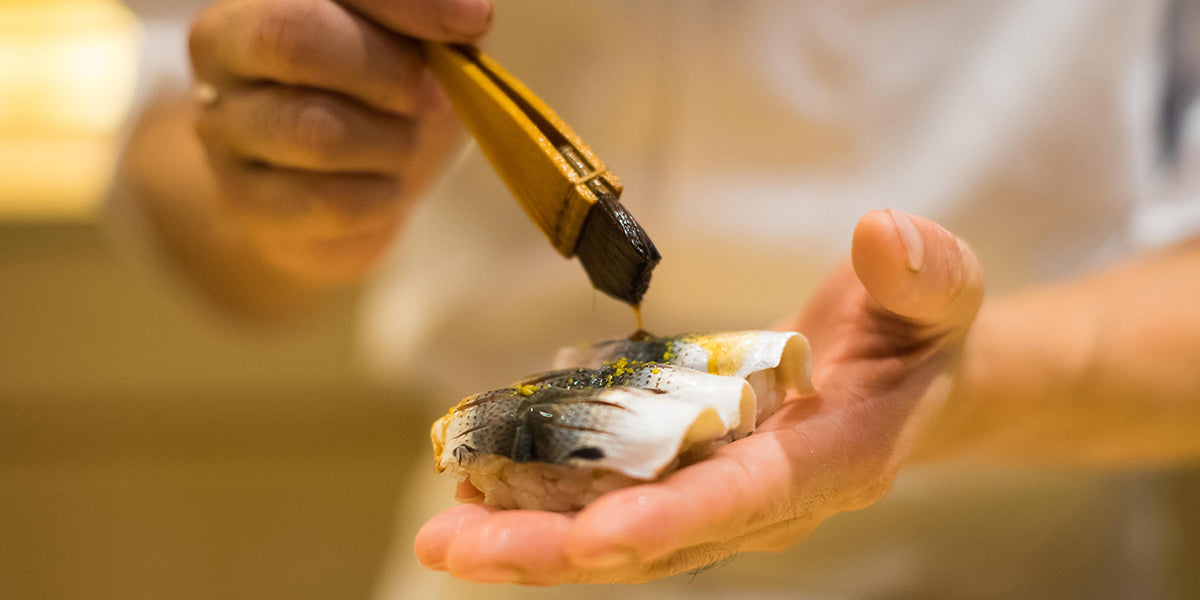
Two things worth knowing. If a piece arrives already brushed with nikiri sauce, it does not want soy — dipping it is the one gesture that tells the counter you haven't done this before. And if you have allergies or something you won't eat, say so when booking, not on the night: an omakase is bought and prepped that morning around the number of guests expected.
Our honest advice
A three-hour, high-end omakase is not the right first sushi experience for everyone, and we'd say so before taking your money for one. If you're travelling with children, jetlagged on your first night, or simply not certain how much you enjoy raw fish, a good mid-tier counter at lunch will tell you more and cost a great deal less.
Reserve the top-tier evening for the trip where you already know you want it.
If you'd like a seat at a counter that genuinely takes guests, tell your Elite Tokyo Tours tour manager early — the good small places open their books weeks ahead and take bookings by phone in Japanese. We'll be straight with you about what's available on your dates, in Tokyo or anywhere else in Japan, rather than promising a room that isn't open to anyone.