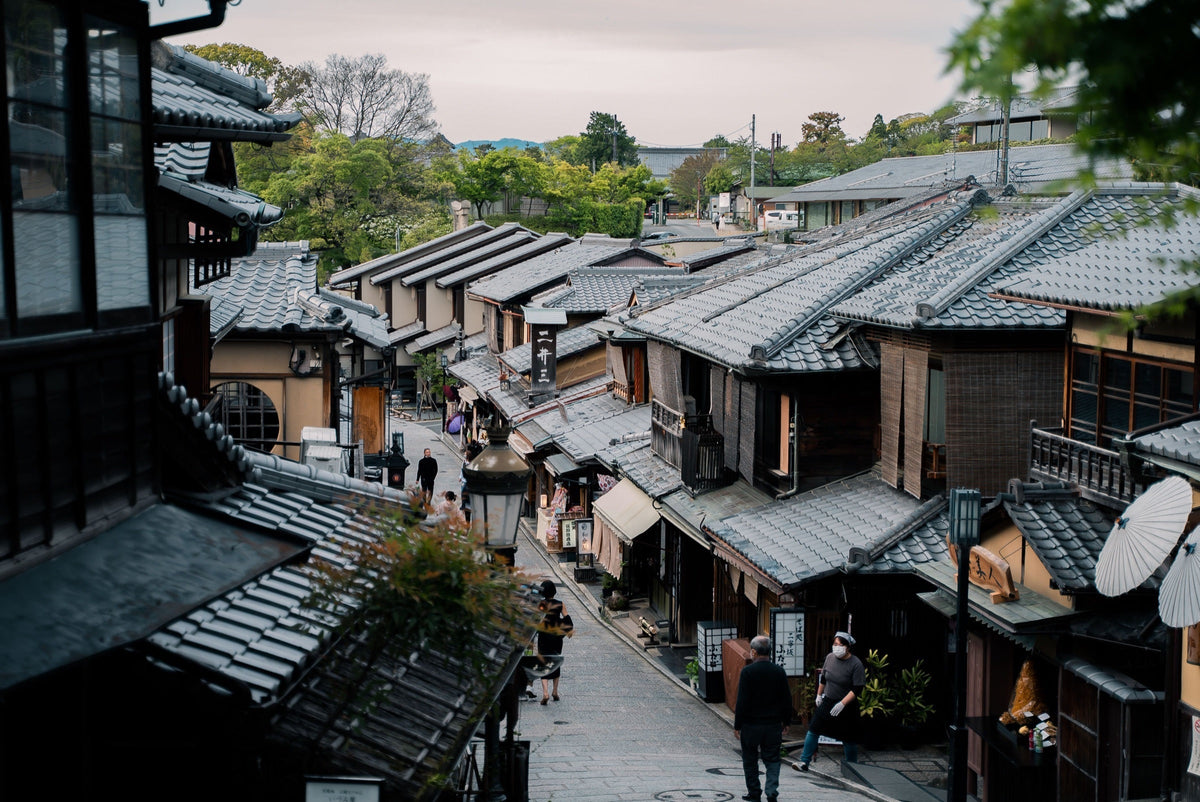
Where to stay in Kyoto is not a question to answer by hotel rating alone. A room in Higashiyama, central Nakagyo, the Kyoto Station area, or the northwest can produce four very different trips—even when the sightseeing list is identical. The difference appears in the first hour of the morning, the trip back after dinner, and every small decision in between.
Choose the neighborhood first. Then choose the hotel that works inside it.
At a glance:
- Higashiyama: best for early walks, historic streets, temples, and evenings with a quieter sense of place.
- Central Nakagyo: the strongest all-round base for dining, shopping, subway access, and flexible days.
- Kyoto Station: best for short stays, frequent train trips, and simple arrivals or departures.
- Northwest Kyoto: best for a resort-like stay, gardens, temple country, and travelers happy to plan around taxis or private transport.
Where to stay in Kyoto: why location matters
Kyoto looks compact on a map, but its important sights are spread across the city. Kiyomizu-dera is in the east, Kinkaku-ji is in the northwest, Fushimi Inari is south of the center, and Arashiyama is far to the west. The official Kyoto City travel guide estimates that a trip from Kyoto Station to several major sightseeing areas can take roughly 25 to 40 minutes before allowing for transfers, walking, or congestion.
That does not mean there is one perfectly central hotel. It means the right address depends on which journeys you want to make easy.
A hotel near the station can remove friction from an early train to Osaka or Nara. It cannot give you a quiet walk through Higashiyama before breakfast. A stay beside a historic lane can make the beginning and end of the day memorable, but may add transfers to western Kyoto. A secluded northern property can feel like a retreat, provided you are not planning to cross the city for dinner every night.
This is where many self-planned trips quietly go wrong: the hotel is chosen first because it looks beautiful, and only later is each day forced to work around its location.
Higashiyama: for Kyoto before breakfast and after dinner
Higashiyama is the clearest choice for travelers who want historic Kyoto to exist outside sightseeing hours. Kiyomizu-dera, Yasaka Shrine, Kodai-ji, Gion, and the old streets around Ninenzaka and Sannenzaka are all on the eastern side of the city. Stay nearby and you can step out early, before the busiest part of the day, or take a short walk after many day visitors have left.

The first hour here can be a walk past shuttered wooden shops, temple bells, and streets still being prepared for the day. The last can be a quiet return through Gion or an unhurried drink near the Kamo River. That access is the real advantage. You are buying time in the neighborhood, not merely a view from the room.
The tradeoff is movement. Eastern Kyoto has limited subway coverage, buses can be slow when roads are busy, and the district includes slopes, steps, and uneven approaches. The city’s own Higashiyama access guidance recommends combining trains, subways, and walking rather than assuming a direct bus will be the quickest option. Travelers with limited mobility should examine the exact entrance and walking route, not just the district name.
Hotels that illustrate the Higashiyama choice
- Park Hyatt Kyoto: set beside the preserved streets near Kodai-ji, for travelers who place the Higashiyama setting at the center of the stay.
- Four Seasons Hotel Kyoto: in the temple district farther south, with access that suits eastern and southern Kyoto particularly well.
These are examples of how an address shapes a stay, not a complete ranking. Higashiyama also has smaller hotels, machiya-style accommodation, and ryokan at very different price points.

Central Nakagyo: the best-balanced base for most itineraries
Central Nakagyo is the sensible middle ground. The broad area around Karasuma Oike, Kyoto Shiyakusho-mae, and the northern side of Shijo places travelers near restaurants, shops, Nishiki Market, and two useful subway lines. From the right address, it is possible to walk toward the Kamo River or downtown and still make efficient starts toward other parts of Kyoto.
The morning here feels more like a lived-in city than a preserved district: neighborhood coffee, cyclists, office workers, and quiet side streets behind larger avenues. At night, the advantage becomes even clearer. You have a wide choice of restaurants and bars without building a long transfer into the end of every day.
Nakagyo works especially well for first-time visitors with a mixed itinerary. East, west, north, and south all remain possible. The compromise is that the hotel doorstep may not deliver the cinematic Kyoto image many travelers imagined. You gain flexibility rather than immersion.
Hotels that illustrate the central Nakagyo choice
- Ace Hotel Kyoto: directly connected to Karasuma Oike Station, a useful example of choosing rail access and a lively central setting.
- HOTEL THE MITSUI KYOTO: beside Nijo Castle, shifting the center of gravity slightly north and west while remaining in Nakagyo.
- The Ritz-Carlton, Kyoto: on the Kamo River at Nijo, well placed for travelers who value the river and eastern side of central Kyoto.
Those three locations all carry the same ward name, yet they produce different walking patterns. In Kyoto, even the nearest station exit and the side of the river can matter.
Kyoto Station area: when logistics should win
The station area is the correct answer more often than travel writing admits. It is not the most atmospheric base, but it is difficult to beat for a short visit, a late arrival, an early departure, or an itinerary with several rail days.
JR trains provide direct access from Kyoto Station toward Fushimi Inari, Uji, Nara, Osaka, and parts of western Kyoto. Luggage storage and delivery services are close at hand. If your plan includes two nights in Kyoto between other cities, the minutes saved on arrival and departure may be worth more than a picturesque address.
The first hour of the day is efficient: breakfast, the station concourse, and the correct platform. The last hour is practical too, particularly after a day trip. The tradeoff is that an evening around the hotel will feel more commercial and transit-oriented. You will usually travel to Gion or central Kyoto for the intimate lanes, smaller restaurants, and late walk many visitors associate with the city.
Hotels that illustrate the Kyoto Station choice
- Hotel Granvia Kyoto: directly connected to JR Kyoto Station, making the logistical advantage as strong as possible.
- THE THOUSAND KYOTO: a short walk east of the station’s Central Gate, for travelers who want station convenience in a quieter hotel setting.
Do not choose the station because it appears to be the center of Kyoto on a rail map. Choose it when the timetable itself is central to your trip.
Northwest Kyoto: a retreat, not a universal base
Northwest Kyoto brings Kinkaku-ji, Ryoan-ji, Ninna-ji, and the wooded edges of the city into focus. Some of Kyoto’s most distinctive resort stays are here, particularly around Takagamine. Mornings can begin with gardens, forest, or a quieter temple approach. Evenings tend to belong to the property itself.
That last point matters. The northwest is not the place to improvise nightly dinners in Gion or make repeated trips to Kyoto Station. Private cars and taxis can simplify the day, while buses and rail may require more walking or transfers depending on the exact address. The Randen line is useful for parts of the northwest and Arashiyama, but it does not solve every cross-city journey.
Hotels that illustrate the northwest Kyoto choice
- ROKU KYOTO, LXR Hotels & Resorts: in Takagamine, with an access plan that generally assumes a taxi, car, or subway-and-taxi combination.
- Aman Kyoto: a secluded forest setting in the same northern area, designed around the experience of being away from central Kyoto.
A stay here is most convincing when the seclusion is intentional: perhaps the final two nights of a longer journey, a slower honeymoon, or a trip with transport arranged around the hotel. It is much less convincing as a default address for a checklist of sights spread across the city.

Which Kyoto neighborhood should you choose?
| Choose | When your priority is | Accept the tradeoff |
|---|---|---|
| Higashiyama | Historic atmosphere, early walks, eastern Kyoto | More bus, taxi, or transfer planning |
| Central Nakagyo | Dining, flexibility, balanced city access | Less old-Kyoto atmosphere at the door |
| Kyoto Station | Rail travel, short stays, easy luggage days | A more functional first and last hour |
| Northwest Kyoto | Quiet, gardens, a resort or retreat | Longer cross-city trips and fewer spontaneous evenings |
For a first visit with three or four full days and a broad sightseeing plan, central Nakagyo is usually the safest all-round choice. Higashiyama wins when atmosphere is the priority. Kyoto Station wins when the itinerary is built around trains. The northwest should be chosen because you want to stay there, not because a map made it look close enough.
The hotel question a tour manager asks first
A tour manager does not begin with a list of attractive hotels. The starting point is the shape of the journey: arrival time, departure station, planned regions, restaurant nights, walking tolerance, luggage, children, and how much empty time the travelers want.
From there, the practical questions become clear:
- Which two days need the earliest starts?
- Where will the group probably finish after dinner?
- Will anyone struggle with hills, steps, or long station walks?
- Is the trip mostly Kyoto, or is the hotel serving as a base for other cities?
- Would a split stay add something meaningful, or merely create another packing day?
Only after those answers does the hotel shortlist become useful. This is one of the quiet advantages of having a single team design the complete trip: the stay, transport, restaurant plans, and touring days are judged together. You can see how Elite Tokyo Tours manages a journey or explore our bespoke Japan journey examples before deciding how much support you need.
Frequently asked questions
What is the best area to stay in Kyoto for a first visit?
Central Nakagyo is often the best-balanced base for a first visit because it combines dining, shopping, walking, and subway access. Higashiyama may be better if historic atmosphere matters most, while Kyoto Station is stronger for a short or rail-heavy itinerary.
Is Kyoto Station a good area to stay?
Yes, especially for late arrivals, early departures, day trips, or stays of only one or two nights. It makes luggage and rail travel easier. The tradeoff is atmosphere: most visitors will travel elsewhere for Kyoto’s intimate streets and evening dining.
Should I stay in Higashiyama or near Kyoto Station?
Choose Higashiyama for early temple walks, historic streets, and a stronger sense of place before and after sightseeing. Choose Kyoto Station when convenient trains, luggage handling, and fast arrivals or departures will have a larger effect on the trip.
Is it worth staying near Arashiyama or northwest Kyoto?
It can be, if western and northern Kyoto are a major focus or you want the hotel to feel like a retreat. It is less practical for a general first-time itinerary with repeated trips to Higashiyama, downtown, and Kyoto Station.
Should I split my Kyoto stay between two hotels?
Usually not for a short visit. Changing hotels costs time and attention. A split stay makes more sense on a longer trip when the second location changes the experience—for example, several central nights followed by a deliberate retreat in the northwest.
Choose the day you want, then choose the room
The best answer to where to stay in Kyoto is the neighborhood that improves the hours you will actually live there. Start with the first morning, the final evening, and the journeys you expect to repeat. Once those are clear, the hotel decision becomes smaller—and much easier to get right.
Planning Kyoto as part of a longer private trip through Japan? Tell us what you want the journey to feel like. We will consider the hotel location, daily routes, transport, and pace together before anything is booked.