Tokyo sneaker shopping makes more sense neighborhood by neighborhood. Harajuku is still the obvious place to begin, but it is not the whole story: Shibuya brings the big flagships, Ueno keeps an older specialist-shop spirit alive, Shinjuku is easy and practical, and Kichijoji is worth the ride for collectors who enjoy the search as much as the purchase.
This is not a promise that a particular pair will be waiting on the shelf. Tokyo stock changes quickly, release rules vary, and Japanese sizing often uses centimeters. Think of the guide as a way to choose the part of the city that matches how you like to shop.
At a glance:
- Harajuku: the densest walk for sneaker culture, streetwear, and multi-brand stores.
- Shibuya: polished flagships, major brand experiences, and easy access from Harajuku.
- Ueno: an old-school shopping district anchored by one of Tokyo's best-known independent sneaker stores.
- Shinjuku: convenient brand stores and straightforward fitting if sneakers are part of a larger shopping day.
- Kichijoji: a slower neighborhood stop for older models, resale, and serious browsing.
Harajuku and Jingumae: start with the sneaker streets
If you only have time for one sneaker neighborhood, make it Harajuku. The useful part is not Takeshita Street itself but the web of lanes on both sides of Meiji-dori, especially around Jingumae and Ura-Harajuku. Stores sit close enough together that you can browse without turning the day into a train itinerary.
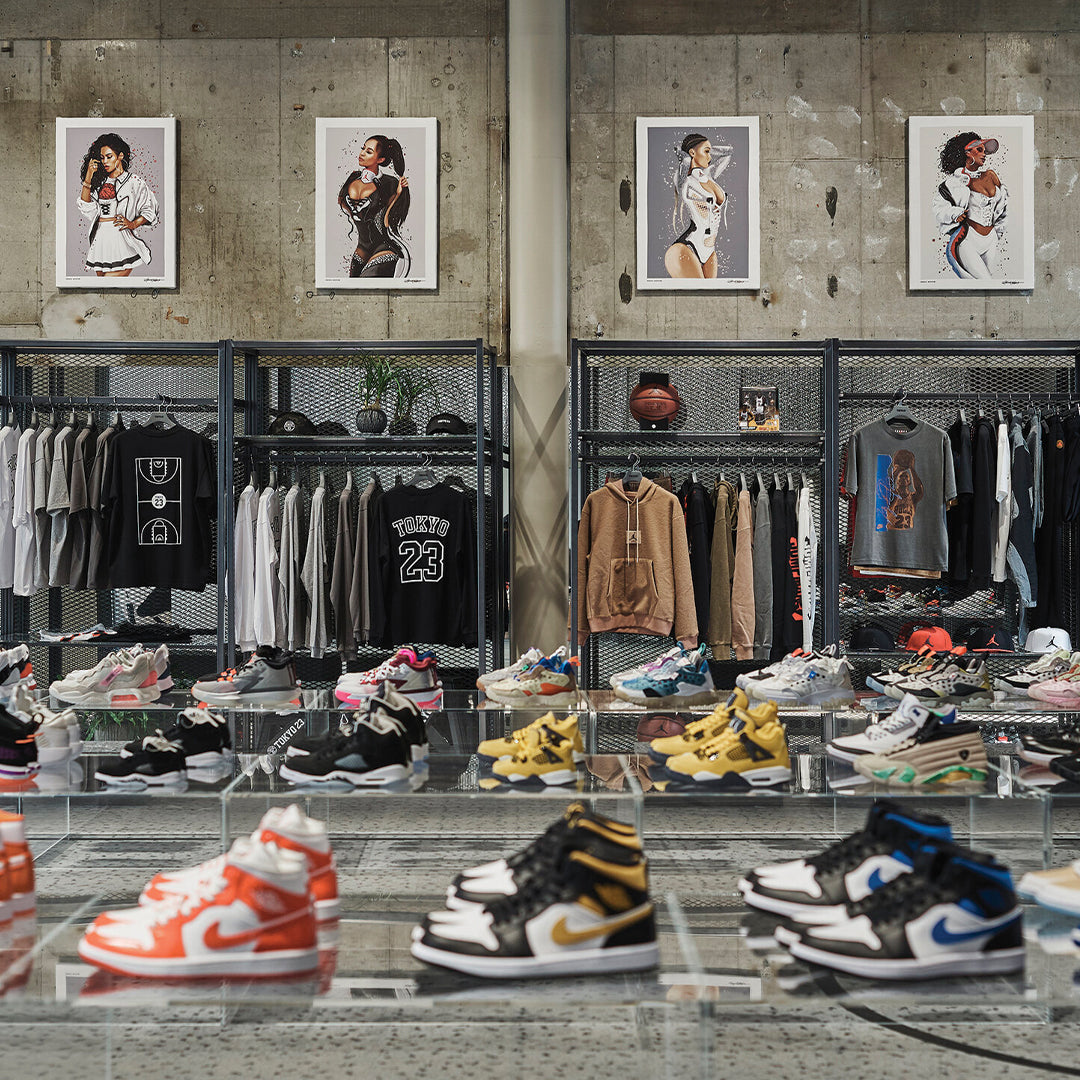
atmos Harajuku is a natural first stop. The homegrown retailer opened its original Harajuku shop in 2000 and helped make sneakers feel like fashion rather than sporting equipment in Japan. Nearby branches now have their own angle: atmos Urahara keeps you in the backstreets, while TOKYO 23 leans into basketball and street culture.
Harajuku works best without a rigid checklist. One block may be all new releases and pristine displays; the next may be vintage clothing, small Japanese labels, or a line forming for a drop. Give yourself room to wander, especially between Cat Street and the quieter lanes behind Omotesando.

Shibuya: big flagships and basketball culture
Walk south from Harajuku and the mood shifts. Shibuya's sneaker stores tend to be larger and more theatrical, with retail spaces built around a whole brand rather than a crowded wall of boxes. It is the right area when you want current releases, apparel, and the flagship experience in one place.
Jordan World of Flight Tokyo Shibuya is the neighborhood's clearest sneaker destination. Japan's first Jordan-only store carries footwear and apparel for adults and children, with brand experiences that have included customization and SNKRS pickup. Even without a purchase in mind, it is a useful stop for seeing how Jordan Brand presents basketball culture in Tokyo.
A few minutes away in Miyashita Park, Kith Tokyo spreads footwear, clothing, and accessories across two floors. The address is technically Jingumae, but it belongs naturally in a Shibuya walk. Pairing the two stores gives you two very different versions of the modern flagship without much backtracking.

Ueno and Ameyoko: a specialist store in an old market district
Ueno feels refreshingly different after Harajuku and Shibuya. Ameyoko is noisy, compressed, and gloriously mixed: seafood, cosmetics, military surplus, snacks, watches, and shoes all compete for attention beneath and beside the railway tracks.
The reason sneaker collectors come is mita sneakers. The independent shop has been part of Ameyoko for decades and is known well beyond Japan for collaborations and a deep multi-brand selection. Its compact, box-lined interior feels closer to the classic Tokyo sneaker-shop image than the spacious flagships across town.
Come to Ueno for mita, then stay because Ameyoko is fun. This is a good neighborhood to combine with vintage clothing or casual food rather than another polished mall. It also pairs easily with nearby Okachimachi and Akihabara if your interests extend beyond footwear.
Shinjuku: convenient, central, and good for fit
Shinjuku is not as concentrated as Harajuku, but it is useful. Many travelers pass through the station, the department stores cover plenty of ground, and a sneaker stop can slot into a day that also includes cameras, books, or fashion.
atmos Shinjuku offers the familiar multi-brand mix close to the south side of the station. For runners or anyone who cares more about fit than hype, the New Balance store at NEWoMan Shinjuku offers foot scanning and shoe-fitting services alongside its lifestyle range.
This is the sensible choice for a first or last day in Tokyo. You may not get the romance of an afternoon in the Harajuku backstreets, but you can try on shoes, compare them with the rest of your shopping, and get back to your hotel without crossing the city again.

Kichijoji: make time for the hunt
Kichijoji sits west of central Tokyo, far enough away that it should be a choice rather than an add-on. The payoff is a neighborhood with covered arcades, small streets, cafés, vintage shops, and Inokashira Park just beyond the station area. It feels like a day out, not merely another retail stop.
Sneaker Shop SKIT's Tokyo store is the draw. SKIT handles new and pre-owned pairs, with older models sharing space with more familiar current releases. The pleasure is in scanning the walls and seeing what turns up, so this is a better stop for an open-minded collector than someone chasing one shoe in one size.
If SKIT is your only reason for traveling west, check the shop's current information and online listings before you go. If you already want to see Kichijoji, however, the store gives a sneaker collector a very good excuse to explore the neighborhood.
A few things to know before sneaker shopping in Tokyo
- Know your size in centimeters. Bring the US, UK, or EU size you normally wear too, but expect fit to vary by model.
- Search by product code. A screenshot is helpful; the exact style code is better when language or color names differ.
- Do not build a day around assumed stock. Releases, raffles, purchase limits, and pickup rules can change with little notice.
- Inspect pre-owned pairs carefully. Look at the sole, midsole, glue, discoloration, odor, replacement parts, box, and stated condition.
- Plan for the boxes. Original packaging takes real luggage space. Decide whether keeping it matters before your final shopping day.
Harajuku and Shibuya combine naturally on foot. Ueno and Shinjuku are easy standalone stops on a broader day. Kichijoji deserves its own half day. Trying to do all five at once would leave you seeing more train platforms than sneakers.

Make Tokyo sneaker shopping a neighborhood day
The best Tokyo sneaker shopping day is not necessarily the one with the most stores. It may be an afternoon walking from Harajuku to Shibuya, one focused visit to mita in Ueno, or a slow trip to SKIT followed by coffee in Kichijoji. Start with the neighborhood, keep expectations loose, and let the shelves do some of the deciding.
For more collecting ideas, see our Tokyo record shopping guide or compare the city's broader shopping neighborhoods.
Want help connecting the right sneaker neighborhoods? Tell us the brands, sizes, and kinds of stores you enjoy when you book a Bespoke Tour. We can shape the route around your interests while keeping the day enjoyable for everyone traveling with you.